
Project Overview
Project Overview
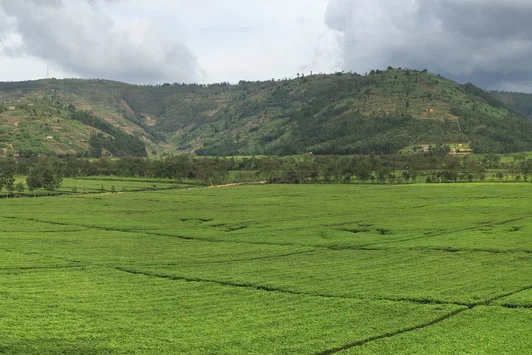
CIAC Rwanda has facilitated a landmark partnership between smallholder tea farmers and a leading Rwandan tea company, creating a Payment for Ecosystem Services (PES) mechanism that rewards farmers for adopting agroforestry and sustainable land management practices. Shade trees planted among tea bushes improve tea quality, reduce erosion, and support biodiversity.
This private-sector-linked model demonstrates how environmental stewardship can be economically viable, with companies paying farmers for the ecosystem services their land management provides — from carbon sequestration to watershed protection.
Key Activities
- Mapping and valuing ecosystem services provided by smallholder tea farms
- Negotiating PES agreements between farmers, CIAC, and the tea company
- Planting shade tree species among tea crops to improve microclimate and quality
- Training farmers on integrated crop management and agroforestry practices
- Establishing monitoring systems to verify ecosystem service delivery
- Documenting and disseminating the PES model for replication across Rwanda
Expected Outcomes
Over 3,000 tea farmers are expected to benefit from PES payments and improved tea yields through shade-grown practices. The model is projected to increase farmer income by 20–30% while significantly improving the ecological health of tea-growing landscapes across Rwanda.